A short stroll from Swell’s office in central Christchurch, you’ll find a museum that opened earlier this year honouring one of the city’s, and the country’s, greatest innovators: John Britten.
I recently popped in for a visit and couldn’t help but leave inspired. It also got me thinking about John’s story in the context of Kiwi business today, and what we can still learn from the way he approached innovation and took on some of the biggest names in the world.
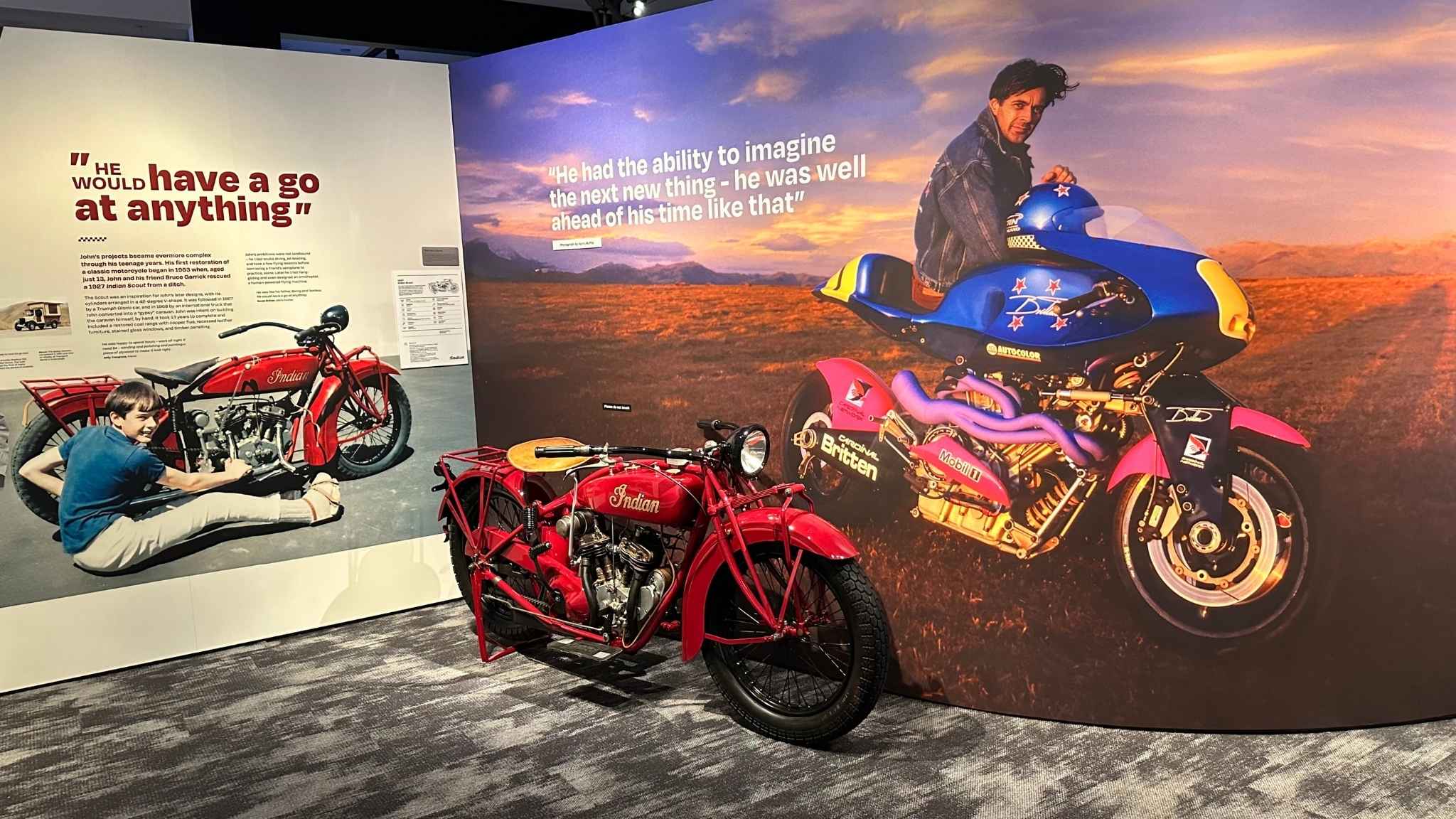
John Britten was an engineer, inventor and product designer with an extraordinarily ambitious idea: to build a world-class racing motorcycle out of Christchurch.
The result was the legendary Britten V1000, designed and built by John and a small team. It was radically different from the bikes it lined up against, challenging conventional thinking around everything from the frame and suspension to aerodynamics and materials.
And it was fast. Very fast.
The Britten took on factory-backed machines from some of the biggest names in international motorcycling, winning races overseas and setting world speed records along the way.
There’s something about that story that feels very relevant to Kiwi businesses today.
New Zealand companies have always had to contend with scale. We have a small domestic market, we’re a long way from many of our biggest export markets, and our businesses often have fewer people, less capital and fewer resources than the international companies they compete against.
John faced his own version of that challenge.
He wasn’t going to outspend Ducati. And trying to beat them by building another version of what they were already building was unlikely to get him very far.
So, he found another way to compete.
He competed on ingenuity.
He questioned assumptions. He experimented. He built, tested, failed and tried again.
More than 30 years later, there’s plenty in John Britten’s approach that innovative Kiwi businesses can still draw inspiration from.
Compete on ingenuity, not scale
Being a small country comes with some obvious challenges. Smaller markets, smaller teams and, often, smaller budgets.
But viewed with the right mindset, that smallness can also be an advantage.
It can make us more resourceful. More willing to have a crack. Less tied to the way things have always been done. When you don’t have endless resources to throw at a problem, you’re forced to think harder about how you solve it.
John Britten understood this instinctively.
He couldn’t match the resources of the big motorcycle companies. But he could question their thinking. He could move quickly, experiment and find completely different ways to solve the same problems.
Britten didn’t build a different Ducati.
He built a Britten.
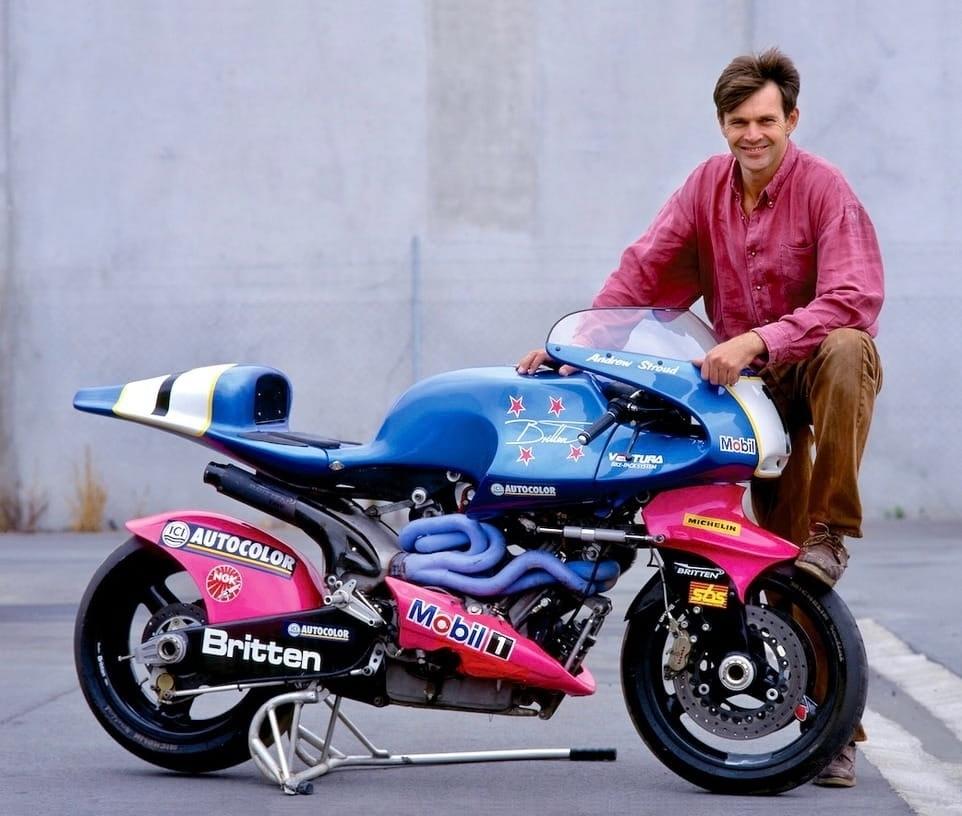
For Kiwi businesses today, the same principle applies. If we can’t compete on scale, we need to find the areas where we can have an edge.
That might be better technology, a smarter process, deep expertise in a niche, or simply looking at an old problem from a completely different angle.
And plenty of Kiwi businesses are already doing exactly that. Across New Zealand, companies are challenging how things are done in their fields, tackling hard technical problems and developing new products and processes that can compete far beyond our shores.
Our size doesn’t have to limit our ambition. If anything, it can push us to be more inventive about how we compete.
What if the rules are wrong?
A frame is a pretty fundamental part of a motorcycle, right?
John Britten wasn’t so sure.
Instead of asking how he could improve or modify the frame, he questioned why the bike needed one at all.
The result was one of the defining innovations of the V1000. Britten did away with the conventional chassis and made the engine itself a structural part of the bike.
He wasn’t just trying to improve the accepted solution. He was questioning whether it was the right solution in the first place.
That kind of thinking ran right through the development of the Britten, along with plenty of classic Kiwi resourcefulness. We often talk about the No. 8 wire mentality. In John’s case, it was sometimes literal. He used No. 8 fencing wire while shaping the bodywork during development.
Every industry has its own version of the motorcycle frame. Products, processes and ways of working that have been around for so long they start to feel like rules.
But what if the rules are wrong?
For Kiwi businesses trying to do something genuinely new, it’s a useful question to keep asking. What are we treating as a constraint that is really just convention? What could we remove altogether? And if we were starting from scratch today, would we still do it the same way?
Great ideas rarely work the first time
Looking at the finished Britten V1000 today, it’s easy to see a masterpiece.
What you don’t immediately see are all the bikes, experiments, failures and iterations that came before it.
The V1000 wasn’t John’s first attempt at building a racing motorcycle. His earlier projects included the Aero-D-Zero and the early Britten V-twin bikes that preceded the machine he would become famous for. Each gave John and his team another opportunity to test ideas, find out what worked and feed those lessons into the next version.
And the racetrack was a pretty unforgiving testing ground.
Problems didn’t stay hidden for long. Components failed. Designs had to change. Races were lost. Then it was back to the workshop to work out why, make it better and try again.
The V1000 didn’t arrive fully formed from one flash of inspiration. It was the product of years of experimentation and accumulated learning.
That will sound familiar to plenty of Kiwi businesses doing genuine R&D today.
When you’re trying to create something that hasn’t existed before, you’re working with uncertainty. Some ideas will work. Plenty won’t. A prototype might prove one part of the concept while exposing a completely different problem.
This is what innovation is all about.
Build. Test. Learn. Improve. Go again.
Britten had the ideas, but just as importantly, he had the tenacity to keep turning those ideas into something better.
Make room for a bit of flair
When you’re building a racing motorcycle, performance is the main objective. It has to be fast. It has to handle. It has to perform when it matters.
But John Britten also understood the importance of how something looks.
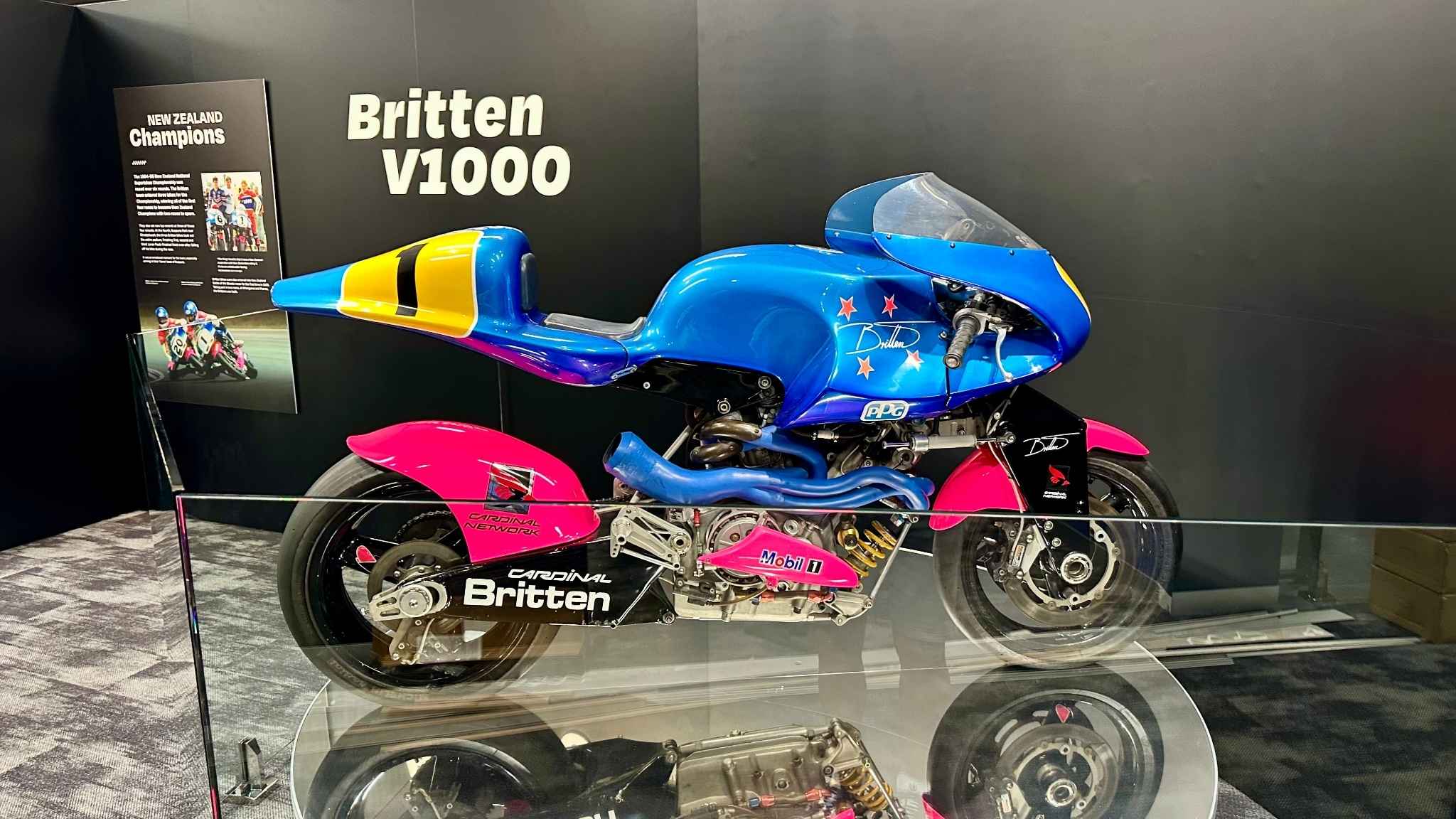
The V1000 wasn’t just an incredible piece of engineering. It was a beautiful object in its own right. Its sweeping bodywork and unmistakable blue and pink colour scheme were bold, distinctive and unlike anything else on the track.
Rider Loren Poole famously described it as “a sculpture capable of 300 km/h.”
There’s something in this for highly technical and engineering-led Kiwi businesses.
When you’re spending years solving a difficult technical problem, it’s understandable that most of the attention goes into making the thing work. Performance, reliability and functionality come first, as they should.
But design can easily become an afterthought.
Britten is a good reminder that it doesn’t have to be.
Great design won’t make up for a product that doesn’t perform. But when the underlying technology is brilliant, thoughtful design can give it character, make it distinctive and help it stand out.
That matters when you’re a Kiwi company competing in a global market.
So, once you’ve nailed the engineering, there’s room for a bit of flair.
The Britten didn’t just perform like nothing else.
It looked like nothing else too.
A very Kiwi story
Taking on the world from little old New Zealand. Punching above our weight. David versus Goliath.
It’s become a bit of a cliché in this country. But there’s a reason for it.
John Britten’s story is a great example. A small team in Christchurch took on much bigger competitors, not by matching their resources, but by approaching the problem differently.
Leaving the museum, I was reminded that these are stories worth embracing.
Being small and isolated comes with challenges for New Zealand businesses. But it also shapes the way we innovate. It makes us resourceful, encourages us to question the established way of doing things, and pushes us to find our own way to compete.
Perhaps rather than always seeing our size and distance as disadvantages to overcome, we should lean into them a little more.
Visit the John Britten Museum
Thanks to the Britten Museum for providing the photos featured in this article. If you’re in Christchurch, we highly recommend making time for a visit. It’s a brilliant tribute to John, his bikes and the people behind them, and well worth experiencing for yourself.
Website: https://brittenmuseum.nz/