We may be biased. Swell is based here, after all. But we think Ōtautahi Christchurch has a pretty strong case for being New Zealand’s innovation capital.
You don’t have to look hard to see why. Just look at a couple of headlines this month.
Kea Aerospace has raised $17.5 million and opened a new manufacturing facility and mission control in Christchurch, as it works towards operating solar-powered aircraft in the stratosphere for months at a time.
Across town, MARS Bioimaging has secured the first commercial sale of its spectral CT scanner, technology developed in Christchurch that can produce highly detailed colour images of the human body.
.webp)
These are seriously sophisticated technologies. One is building aircraft designed to operate at the edge of space. The other is changing how we can see inside the human body.
And stories like these are coming at a regular cadence in Christchurch
They’re also landing at a time when there’s a wider buzz around the city. People are moving here in droves. The central city is filling in. New businesses, restaurants and precincts are bringing more life back into town. Te Kaha, Christchurch’s long-awaited new stadium, has opened its doors. After years of plans, road cones and rebuilding, there’s a sense that Christchurch’s story is shifting.
The conversation is becoming less about what the city has rebuilt, and more about what it’s building next.
Innovation will be a crucial part of that story.
Over the past decade, Christchurch has built up an impressive collection of companies creating new technology, solving difficult problems and selling their ideas to the world. They’ve created high-value jobs, attracted talented people and investment to the city, and helped broaden an economy traditionally built around primary industries, manufacturing and construction.
Around them, an increasingly connected innovation ecosystem has taken shape. Universities and researchers, specialist manufacturers and suppliers, testing facilities, engineers, and investors all play a part.
So too do organisations like Ministry of Awesome (MoA), which has become an important part of Christchurch’s startup scene, helping early-stage founders turn ideas into businesses and connecting them with mentors, investors and the wider startup community.
Look a little closer and Christchurch’s current run of innovation headlines starts to look less like a collection of good news stories and more like something structural.
So, how did we get here?
This Didn’t Happen Overnight
Christchurch’s innovation story didn’t start with the rebuild.
Long before anyone was talking about innovation ecosystems or deep tech, Christchurch and the wider Canterbury region had built an economy around making things and solving practical problems.
Agriculture was at the heart of it. The farms and food producers of the Canterbury Plains supported an ecosystem of machinery, engineering, science and manufacturing. Lincoln University built deep expertise around the primary sector, while the University of Canterbury developed a strong reputation for engineering and science.
Then there were the companies that proved sophisticated technology could be developed in Christchurch and sold around the world.
HamiltonJet has been doing exactly that for decades, turning a New Zealand invention into a global marine propulsion business. Tait Communications built radio technology in Christchurch and took it to international markets. Dynamic Controls grew from a small Christchurch business into a global leader in electronic controls for powered wheelchairs.
More recently, Seequent showed the same thing could happen in software. Founded in Christchurch, its 3D geological modelling technology grew into a global business before being acquired by US infrastructure software giant Bentley Systems for more than $1 billion.
These companies span completely different industries, but there’s a common thread. Deep technical expertise, solving difficult real-world problems, and building from Christchurch for markets much bigger than New Zealand.
The earthquakes undoubtedly changed the city. The rebuild brought investment, new infrastructure and new energy. But it would be too simple to say Christchurch’s innovation economy was created by what happened after 2011.
The ingredients were already here.
What has changed is the depth of the ecosystem around them. New companies are emerging alongside established ones. Experienced people are moving between businesses. Research is being commercialised. Specialist manufacturers are supporting entirely new industries.
And, increasingly, those capabilities are clustering together.
Nowhere is that more obvious than in aerospace.
Aerospace: Taking Innovation to New Heights
If there’s one sector that captures what’s happening in Christchurch right now, it’s aerospace.
A little over a decade ago, describing Christchurch as an aerospace hub might have raised a few eyebrows. Today, that’s increasingly what it is.
Dawn Aerospace is perhaps the best-known example. From its Christchurch headquarters, the company is developing the reusable Aurora spaceplane, designed to take off and land from conventional runways, alongside satellite propulsion systems already being used in space.
Then there’s Kea Aerospace. The Christchurch company is developing solar-powered aircraft designed to fly in the stratosphere for months at a time, capturing high-resolution imagery of the Earth below. Think of some of the jobs traditionally done by satellites, but from an aircraft flying closer to Earth.

Its new Christchurch facility brings aircraft manufacturing, engineering and mission control under one roof, giving Kea room to grow as it works towards commercial operations.
But Kea won’t have the building to itself. The facility will also house the Canterbury Aerospace Hub, a dedicated space bringing together aerospace startups, scaleups and other organisations working in the sector.
One of its founding tenants is Astrix Astronautics, an Auckland-founded space technology company developing power systems for satellites. Its decision to establish a presence in the new hub is another sign of the ecosystem maturing. Christchurch isn’t just producing aerospace companies of its own, it’s becoming a place other aerospace companies want to be.
Aerospace New Zealand will also be based there, creating a physical meeting point for founders, engineers and others working across the industry.
And the ecosystem extends well beyond one building.
Christchurch’s existing engineering and manufacturing capability is feeding into the sector too, with companies such as Argus Manutech bringing the sort of precision manufacturing expertise aerospace demands.
Then there’s Tāwhaki National Aerospace Centre at Kaitorete, less than an hour from central Christchurch. Its dedicated aerospace facilities give companies somewhere close to the city to test and develop new aircraft and technologies.
Add in engineering and research capability from the University of Canterbury, specialist suppliers and a growing pool of people with aerospace experience, and the picture starts to look quite different.
These aren’t simply a handful of interesting aerospace companies that happen to share a postcode. They’re becoming part of a wider system, where the presence of one company, supplier or piece of infrastructure makes it easier for the next one to succeed.
Taken individually, the companies are impressive. Together, they start to look like an industry.
And aerospace isn’t an isolated example.
MedTech: From Research to the Real World
Christchurch’s medical technology ecosystem has been decades in the making.
Dynamic Controls (now Allient) has been designing electronic control systems for powered wheelchairs in Christchurch since the 1970s, growing into a global business whose technology has helped give people greater mobility and independence around the world.
Enztec followed in the early 1990s, developing specialist instruments for orthopaedic surgery from Christchurch and building an international business before being acquired by US medical technology company Orthofix in 2022.
MARS Bioimaging sits neatly between those deep roots and the new generation coming through today.
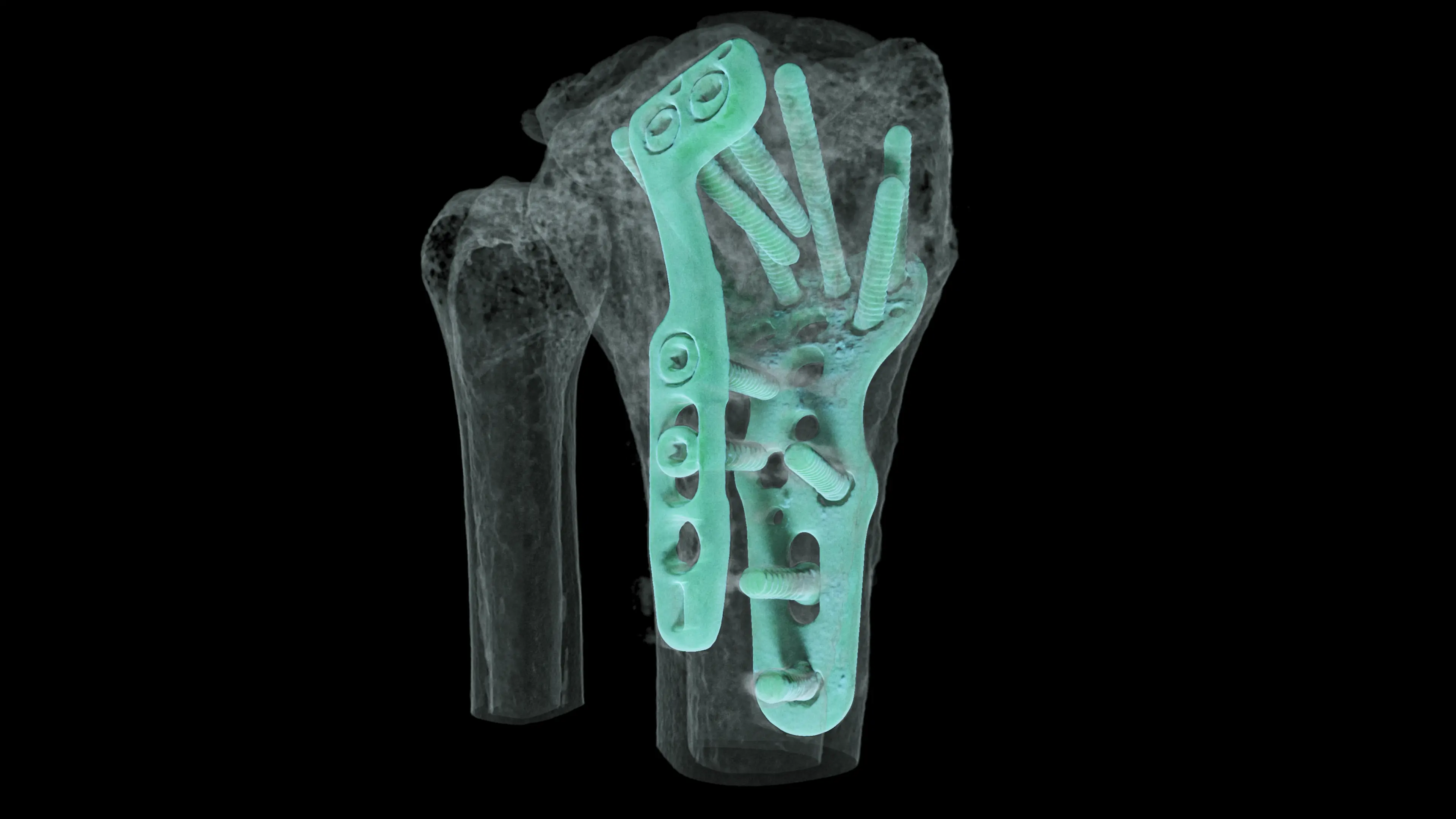
Its spectral CT technology grew out of decades of research in Christchurch, combining expertise in physics, engineering and medicine to produce detailed colour images of the human body. This year’s first commercial scanner sale was the culmination of a very long R&D journey, and an important step towards taking that technology into wider clinical use.
TASKA Prosthetics is another Christchurch success story, building an international business around its waterproof, multi-grip prosthetic hand, which brings together mechanical engineering, electronics and medical technology.
And the ecosystem continues to broaden.
Medsalv is tackling waste in healthcare by remanufacturing medical devices that would otherwise be discarded after a single use. BioOra is developing CAR T-cell therapies and has established specialised manufacturing capability in Christchurch. Precision Chroma is applying advanced separation technology to pharmaceutical and biotechnology manufacturing.
The technologies are very different, but many of the ingredients behind them are the same: strong health research, deep engineering capability, universities and hospitals, specialist manufacturing, and people with experience turning complex ideas into products that can actually be used.
Because great research is only part of the challenge. Turning it into a product, manufacturing it reliably, navigating regulation and eventually selling it around the world is another thing entirely.
Christchurch has been building experience across that journey for decades.
And that experience has a habit of compounding.
Bioeconomy: More From the Land
Drive ten minutes beyond Christchurch’s edge and the city gives way pretty quickly to paddocks.
That proximity to the land has shaped Canterbury’s economy for generations. Agriculture, food production and wool are part of the region’s identity, creating deep expertise in everything from plant science to agricultural engineering.
Now some of Christchurch’s most interesting companies are finding completely new ways to put those natural resources to work.
Take KiwiFibre for example. Harakeke was a vital material for Māori and later became the basis of one of New Zealand’s earliest export industries. Now the Christchurch company is turning it into a high-performance composite material that can replace or complement carbon fibre and fibreglass.

And it’s already being put through its paces. KiwiFibre has been used for the front and rear bumpers and roof of Hayden Paddon’s electric rally car, with the material also finding applications in everything from snowboards to boats. It’s a strikingly modern use for one of New Zealand’s oldest natural resources.
Leaft Foods is taking a similar value-add approach to something much more familiar to Canterbury: pasture. The company has developed technology to extract Rubisco, a high-quality protein found naturally in green leaves, at commercial scale. Using Canterbury-grown alfalfa, Leaft can separate that protein for use in food and nutrition products, creating an entirely new source of value from a crop traditionally grown for animal feed.
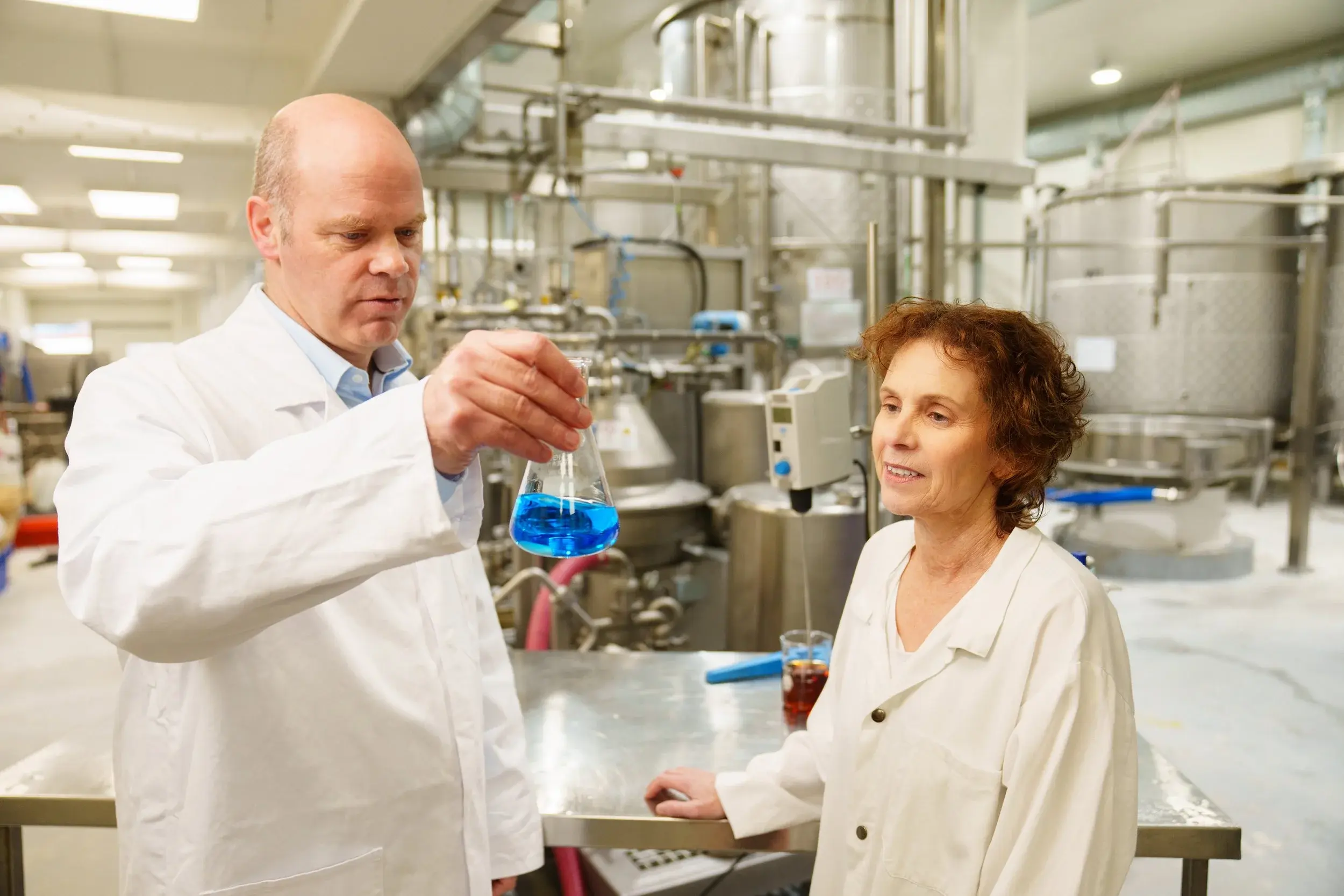
Tertiary Extracts Ōtautahi (TEO) is approaching the opportunity from another angle, using extraction and processing technology to recover valuable compounds from biological materials.
Wool presents another opportunity. Canterbury has long produced it, but the challenge has increasingly been how to create more value from the fibre.
Christchurch-based Untouched World offers one example, developing its own merino yarns and blends, sourcing most of its merino from nearby Glenthorne Station and making the majority of its garments in Christchurch. Those Christchurch-made garments have travelled a long way, including into the wardrobe of former US President Barack Obama.
Behind the commercial businesses is plenty of research capability too. Lincoln Agritech is working across bio-based materials, sustainable textiles, biotechnology and ways to create higher-value products from natural and agricultural resources.
The paddocks haven’t disappeared from Canterbury’s economic story. We’re just finding more interesting things to do with what comes out of them.
Cleantech: Engineering a Cleaner Future
Some of Christchurch’s strongest engineering and science capability is now being pointed at one of the biggest challenges of the next few decades: decarbonisation.
Fabrum is a standout example. The Christchurch company has built world-leading expertise in cryogenic engineering, developing technology to produce, store and dispense liquid hydrogen. From its base here, it is working on projects spanning aviation, transport and industry, taking highly specialised engineering developed in Christchurch into some seriously ambitious applications around the world.
.webp)
Aspiring Materials is taking on another notoriously difficult source of emissions: the materials we use to build things.
The Christchurch company is developing technology that uses olivine, an abundant volcanic rock, to produce a range of useful materials, including lower-carbon alternatives for cement. The process also creates the potential to permanently capture CO2. Given cement alone is responsible for a significant share of global emissions, the size of the problem, and the opportunity, is enormous.
Other Christchurch companies are attacking the transition from different angles.
EVNEX develops smart electric vehicle charging technology, combining locally designed hardware and software to help homes, businesses and electricity networks manage the growing demand for EV charging.
University of Canterbury spinout Zethos is focused on heavy industry, developing cleaner ways to recover valuable metals such as zinc, copper and nickel from industrial waste. It has already built a demonstration facility in Christchurch as it works towards industrial scale.
Different technologies, but a common thread: deep science and engineering being applied to some of the hardest parts of decarbonisation.
Software: Built Here, Used Everywhere
Not all of Christchurch’s innovation involves something you can touch.
Seequent is the obvious place to start. Founded in Christchurch, its 3D geological modelling software grew into a global business used across mining, infrastructure, energy and environmental projects. In 2021, it was acquired by US software company Bentley Systems for more than $1 billion.
Another generation is now coming through.
Partly is tackling the surprisingly complicated world of automotive parts, building AI and software infrastructure for a fragmented global repair industry. In June, it raised US$50 million in Series B funding at a US$500 million valuation as it accelerates its expansion into the US market.
Partly is also a good example of how experience feeds back into the wider ecosystem. Founder Levi Fawcett is now a trustee of Ministry of Awesome, which supports early-stage founders and startups across Christchurch.
VXT is another homegrown success story. What started as a University of Canterbury student project has grown into an AI-powered communications platform now used by more than 1,700 law firms around the world.
Then there’s Lumin. Founded in Christchurch by University of Canterbury engineering graduate Max Ferguson, its document software has grown from a simple PDF tool into a global platform used by more than 100 million people.
Contented is one of the newer names to watch. The Christchurch AI company turns workplace conversations into useful business documents and insights. After reaching more than 200 customers globally while bootstrapped, it raised an oversubscribed $4.1 million seed round earlier this year to accelerate its international expansion.
Different stages, different problems, but a similar trajectory: start in Christchurch and build for a market much bigger than New Zealand.
The Bigger Picture
Taken together, these companies tell a bigger story than any one funding round, product launch or new facility.
They’re building the kinds of businesses Christchurch needs for its next chapter: creating highly skilled jobs, attracting talent and investment, and selling valuable products and intellectual property to the world.
There’s a wider New Zealand story here too.
We’re a small country, a long way from most major markets. Competing on scale is rarely going to be our strength. But developing clever solutions to difficult problems, building valuable technology here and selling it into much larger global markets can be.
Christchurch offers a compelling glimpse of what that looks like.
And the more companies that succeed, the stronger the environment becomes for those that follow. Experienced people move between businesses. Suppliers build new capabilities. Investors pay attention. Graduates can pursue ambitious careers without leaving the city.
That’s the real value of an innovation ecosystem. Success creates the conditions for more of it.
Which brings us back to the question we started with: is Christchurch New Zealand’s innovation capital?
So, Is It?
Is Christchurch New Zealand’s innovation capital?
Those of you up in the big smoke of Auckland might have something to say about that.
Fair enough. Auckland is New Zealand’s largest city, home to a huge share of the country’s technology companies and investment. But it’s also much, much bigger.
What makes Christchurch’s case so interesting is the concentration. For a city of its size, there’s a remarkable amount of high-value innovation happening here, particularly across sectors that demand serious science, engineering and technical expertise.
Of course, “innovation capital” isn’t something you can easily measure, and we’re not pretending there’s a definitive league table.
But look at the companies being built here, the research and infrastructure around them, and the increasingly connected ecosystems taking shape, and Christchurch has a strong case.
For a long time, the city’s story was understandably about what it had lost, and then what it was rebuilding.
Now the more interesting question is what Christchurch builds next.
Judging by what’s already happening here, there’s plenty to be excited about.
About Swell
Swell is a Christchurch-based innovation funding advisor, helping innovative businesses across New Zealand access funding opportunities such as the R&D Tax Incentive.
We’re proud to play a supporting role in New Zealand’s innovation ecosystem, helping ambitious businesses move forward.